|
We knew life in America would never be the same after the terrorist attacks of September 11, 2001, but no one knew exactly how it
would change. How has our society and country come to terms since
then? Public radio tackles this question with Understanding America
after 9/11, a week of special coverage on stations nationwide.
Stories and programs from Understanding America after 9/11 were broadcast on public radio stations nationwide September 3 through September 10, 2002. Many of the stories are archived on this site.

You're invited to participate in an online chronicle of how our lives have changed — and remained the same — a year after the terrorist attacks.
Share your answer and read others' responses.

Planes overhead make me anxious now. It heightened my sensitivity to sound, before I never really heard the airplanes...


After getting past the initial shock, anger and sadness, what remains is a renewed love for life, and a heightened sense of compassion and tolerance...

 NPR's Lost and Found Sound and the public broadcasting community are collecting audio traces of the World Trade Center, its neighborhood and the events of September 11th. Explore the archive, contribute your own sounds and stories, and immerse yourself in the Sonic Browser, an interactive soundscape of stories and audio fragments at www.sonicmemorial.org
NPR Special Coverage:

|
|

Living with Terror: The World Speaks a Year After 9/11
WAMU - Washington, D.C. and BBC - London
Award-winning journalists Robin Lustig and Deborah Amos hosted a two-hour live event featuring call-outs to top foreign correspondents, comments from dignitaries, and questions from around the world.
(2:00:00)
|
Living with Terror: America Speaks a Year after 9/11
WBUR - Boston, MA, Minnesota Public Radio - St. Paul, MN, KPCC Los Angelos, CA
Ray Suarez, now with PBS, and Stephen Sackur from the BBC in London hosted live roundtable discussions in L.A., the Twin Cities, and Boston. Audiences compareed views about how 9/11 has changed their lives and the country, and how the fear of terrorism will influence the future.
(1:48:00)
|

The Spiritual Fallout of 9/11
Minnesota Public Radio, KNOW, St. Paul, MN
We delve into uncomfortable religious and moral questions that the September 2001 terrorist attacks raised—questions of meaning that Americans have only begun to ponder one year later. Also, a riveting first-person account of the religious life that grew up at and around Ground Zero and was largely hidden from news reporting. (58:50)
|
Lost and Found Sound's
Sonic Memorial Special
www.sonicmemorial.org
In this intimate, historic, sound-rich documentary, narrator Paul Auster weaves
together voicemails, on-site recordings, oral histories, remembrances and
stories collected from NPR's Sonic Memorial phone line. (59:00)
|
Survival of the Fittest
KERA-FM - Dallas-Ft.Worth-Denton, TX
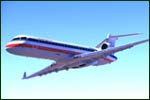
The nation's airlines were stunned a year
ago when terrorists used four of their planes as weapons. American Airlines
lost two jets on September 11th, and since then has lost more than $2
billion. Bill Zeeble reports on the carrier's and its employees' continuing
efforts to recover and redefine themselves. (7:39)
|
Viva Los Estados Unidos
KERA-FM - Dallas-Ft.Worth-Denton, TX
The attacks on September 11th, 2001 forced
the cancellation of Hispanic Heritage Month activities that were due to
begin nationwide five days later. The celebration resumes this year
immediately following the first anniversary of 9/11, and commentator Marisa
Treviño says the timing adds more confusion to an already difficult
situation. (3:17) |
We Were on Duty
rlpaulproductionsSoundprint Media Center, Washington, DC
We Were on Duty is an oral history of the survivors who were on duty at the Pentagon on September 11. In their own words, you'll hear of their harrowing escape, the ordeals of their burn treatments; and how they've turned to heaven, their families and their military training to pull them through. (1:00:00)
|

|
|